
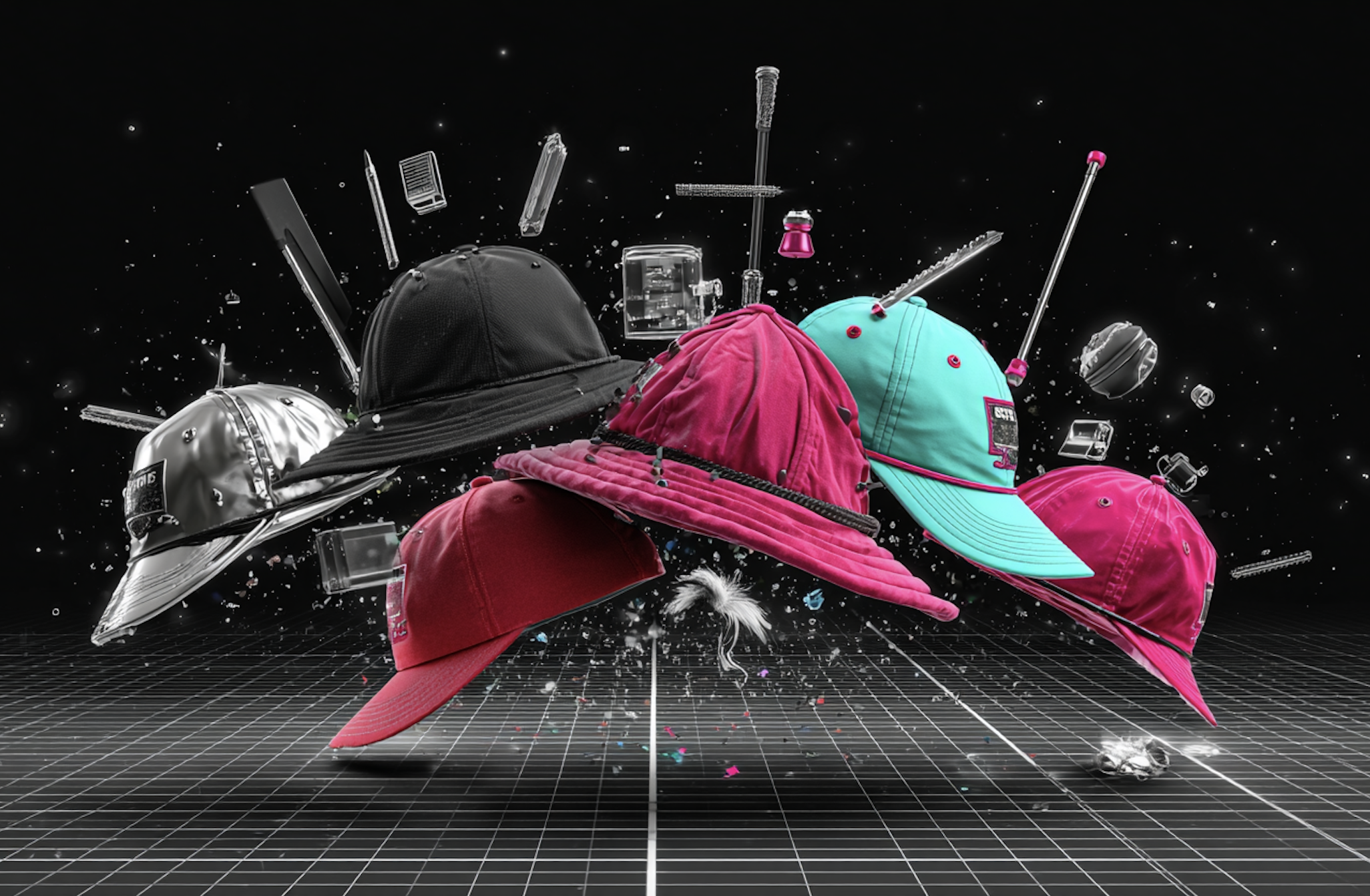
10 AI Hats Every Australian Business Leader Needs to Wear in 2026
Your competitors are doing $50k more revenue per employee than you. Not because they're smarter. Because they automated the repetitive work while you were waiting for the perfect AI strategy or do-it-all tool and throwing anything in the bin that didn’t do one particular thing.
I spend my days inside Australian businesses actually building automations and deploying AI systems to let smart people do smart work. Not keynote decks. Not conceptual bullshit. Real automations that turn:
- 4-hour weekly manual reporting into 4-minutes reading an email
- 3-day proposal turnarounds into same-day delivery
- Manual social monitoring into instant red-flag alerts
- 10-person support queues into 1-person escalation teams
Just SOME examples of how in 2025, we helped Australian businesses unlock over
5,200 HOURS
by getting robots to do, robot work.
The gap between what's possible today and what most companies are doing is comical, but ultimately reflective of a risk averse and if it’s not broken (albeit slow) don’t fix it (or spend money on it).
Here's the truth: North of 20% of what used to be Google searches have shifted to LLM’s. Walmart's in a human hiring freeze while they build AI-first commerce. LLM advertising is coming whether you're ready or not. And most Australian businesses are still debating who should pay for the ChatGPT subscription.
What follows are ten angles you need to understand if you want to run a business that exists (and thrives) in 2027. Some of this will be uncomfortable including the part where I tell you that AI won't fix your broken processes - it'll just help you fail faster at scale.
I'm not here to sell you tools or fear. I'm here to give you the operating manual I wish every leader had before they called me.
I’m not a futurist, I'm purely an automation & AI practitioner with a point of view.
Before we get to hat #1 there are some things you need to calibrate your expectations around.
- AI & automation is not a silver bullet.
- Effective AI & automation requires ongoing testing & optimisation.
- AI & automation costs money to build, deploy and maintain (albeit cheaper ongoing than a salary)
- AI & automation’s value is realised 10x if you’ve already put time & effort into your current manual processes.
Also, probably temper your expectations around my video editing skillz and fashion choices when it comes to hats.
"But surely with AI you can do epic video editing" - not untrue, but if you consider before this video all I had made was a skateboarding highlights video in 2003 on windows XP, not a bad trajectory.
FULL VIDEO (ALL 10 HATS):
🎩 Hat One: The Legal Hat (The One Nobody Wants But Everyone Needs)
The productivity commission says AI will boost the Australian economy by $116 billion and productivity by 4.3%. So naturally, the government's response is to make it incredibly hard for anyone to be compliant and achieve efficiency.
December 10, 2026: that's when transparency requirements for automated processes become mandatory. If you're using automation in ways that might raise eyebrows, you've got 12 months to fix it. Retrofitting compliance is like renovating a bathroom with someone showering in it.
The government's currently conducting mandatory AI guardrail consultations. Nothing we haven't been telling BRAIVE clients, but "guardrails" is smoke for serious momentum in AI regulation. And if the privacy act amendment process is anything to go by, we're heading for overregulation.
There's supposedly a middle ground, but 2026 will likely see hard and fast dos, don'ts, and possible tech bans.
💡 TIP: Upload the actual law (Privacy act 1988 incl. Dec 24’ amendments) is a good place to start and build upon) and your internal policies to a custom GPT. Have your own privacy lawyer at your fingertips for the cost of a coffee subscription.
LEGAL x AI HAT SNIPPET:
📊 Hat Two: The Advertising Hat (Where Search Meets Commerce)
ChatGPT was a masterclass in what being first to market can do. Might not be the best, might not be the cheapest, but it catalysed a global cultural shift in how we search for information. Soon, how we conduct commerce.
"Just Google it" has become "Throw it into ChatGPT."
SEO still exists, but if AEO (Answer Engine Optimisation) isn't part of your strategy, you're already behind. Sorry, just a fact. No “you’ve still got time you’ll be okay *head pat*” - you’re behind. Catch up.
The big ticket for 2026 is LLM advertising. Here's the challenge: LLMs give recommendations, not results. Let any brand supersede those recommendations by paying, with something arguably worse, and you'll see user trust slowly decline. Sam Altman's said this himself - he's open to trying sponsored answers but inherently hates them.
My theory? One path would be unlocking keywords or prompts to bid on based on your organic LLM ranking. The buying mechanism is going to be fascinating to watch unfold.
Outside of LLM advertising, 2026 will see agentic campaign management (Revenue opportunity>Build creative>build campaign>launch campaign>optimise>report) trialled end-to-end, then quickly put back in its box by the industry (though SaaS platforms will act like it's the second coming and smaller brands who don’t necessarily prioritise their brand health will adopt).
ADVERTISING x AI HAT SNIPPET:
🤖 Hat Three: The Automation & Agent Hat (From Assistants to Executors)
Nobody in Silicon Valley can agree on a universally accepted definition of AGI, so if you're feeling behind, cut yourself some slack. Earlier this year I was in Cleveland Ohio listening to some of the bigger wigs in AI and whilst it’s undeniable the adoption of AI & automation as a hygiene factor in American businesses far surpasses Australia, they’re also very open that the pace the industry is operating at allows a mix of actual practical solutions for businesses to win, versus the tech giants overpromising/putting polish on things that aren’t quite there to grab market share.
One thing they do agree on in Silicon Valley is that people either massively over or under estimate what agents can do right now. What a time to try and build a business in this space.
Most businesses already have some level of automation. Even email filters count. On the other end, you might have a chat agent creating on-brand PDF proposals from a few bullet points. Both are possible right now.
2026 will bring the shift from AI assistants to AI executors and an alignment on common (and proven. Key word, proven) agent use cases. Instead of AI giving you a Monday morning summary of overdue deadlines, it finds the contact you're waiting on and pings them. Instead of quarterly reviews to identify common support tickets, your quarterly review is of solutions AI has already built based on patterns.
What's changed isn't capability but the confidence gap. AI lowered the barrier to the point where people suddenly feel like automation was never that complex. It's not that the work got easier. It's that AI made everyone realise the walls were mostly psychological.
The brave will win in 2026. Because automation budget isn't a short-term survival item, it's easy to de-prioritise but oh so necessary. Those who tackle the low-hanging fruit - admin, reporting, scheduling - free up capacity for genuinely gnarly use cases.
We worked with one brand that's now doing $50k more RPE year-on-year thanks to 11 automations, a couple of agents and 4 AI assistants. No impact on work-life balance. It works. The automations had a set up cost, and an ongoing maintenance cost less than 1/20th of the cost of an hourly rate of a human to do the same tasks/processes.
⚠️ WARNING: Review your process first. You can make an unprofitable process more efficient with AI, and then you're just scaling inefficiency.
AGENTS & AUTOMATION HAT SNIPPET:
👥 Hat Four: The Talent Hat (Wolves in Sheep's Clothing)
Australia lacks deep AI talent pools compared to major markets. It is what it is.
2026 will bring wolves in sheep's clothing - businesses with newfound "AI service offerings" who haven't invested in talent or training. They just want a piece of the pie. Remember during covid when there was an immense talent shortage and juniors were thrust in to $150k salaries, managing teams they weren’t ready for and having “Senior” in their title? Similar things will happen. Be wary of “Head of AI” etc. titles in 2026 because you’ll come across them and if their last role was absolutely nothing to do with AI, maybe ask some questions.
Getting baseline AI literacy internally is critical. Your staff will see ads for AI this and AI that. You want them to quickly identify if the ad or sales rep is full of shit. You want them confidently asking questions like is it “black box” AI or are they happy to share their model and give you a look under the hood?
You also want your own army having the skills to identify and improve processes inside your own business.
🚩 RED FLAGS in training providers:
- Leading with fear
- Slides that are 99% about ChatGPT
- Lots of conceptual talk without showing the how
We're past conceptual. Value now comes from specialists.
From a talent acquisition perspective, you'll get questions about how you use AI and what the guardrails are. Be ready. Gen Z are now largely in their mid-twenties and are AI natives. Two offers largely the same, but Company A has paid ChatGPT licenses, rewards good AI use, and encourages exploring? Easy choice.
You’ll also start to see talent split in to AI disciplines. Language, vision, prediction and automation. They will be the lanes people will begin to specialise in when it comes to earning a full time wage on the back of AI. Be wary of AI generalists (maybe more 2027 but we’ll see).
AI TALENT HAT SNIPPET:
🏗️ Hat Five: The Infrastructure Hat (Fix Your Workflows First)
Most Australian businesses think they lack the infrastructure for effective AI use. Usually wrong. You can outsource compute and most volume-based requirements. What's tricky to outsource is fixing pre-AI broken workflows.
If you haven't fully embraced AI and automation yet, don't. Not until you've done everything possible to ensure your current workflows are tight and should exist in the first place. Because AI will 10x them - good or bad.
Before making big bets on AI, review your tech stack. Review what AI capabilities they already bring to the table (they all will).
Review your expectations. If you're not using any CRM capability, don't expect AI to start pumping out three perfectly targeted emails weekly to segmented lists. It absolutely can, but you don't have the internal spine for it yet.
💡 TIP: Get basics in place first, then let the clever stuff scale on top.
AI INFRASTRUCTURE HAT SNIPPET:
🎨 Hat Six: The Creativity Hat (The Spinning Wheel, Not the Potter)
I'm a big fan of AI for creative work, but not how you think.
Some of the best creative ideas don't come from creatives themselves, but from account managers, C-suite, or literally anyone without the ability to properly visualise their idea. AI enables a far improved briefing experience for creative executors. The barrier for someone who’s never opened adobe illustrator in their life, providing a mock 3D model of what they want is now so low, the ability to test all ideas or take and bring to life ideas from more people massively increases.
I've just seen tonnes of Black Friday ads clearly made with AI. Obvious they were AI, and I loved it - it reflected teams outputting more than they could without it. Don’t get me wrong a good 80% of the actual creative was absolute god awful, and would those same brands lean on AI for a major brand campaign outside Q4? Probably not.
In 2026, more brands will lean on AI creative. What it gives is opportunity for human creatives to spend more time on the why, the meaning, and the strategy - where they should be playing.
💡 TIP: AI is to content what the spinning wheel was to pottery. It doesn't remove the artistry, it just makes shaping and building your ideas 100x easier.
AI CREATIVE HAT SNIPPET:
🏆 Hat Seven: The Competitive Advantage Hat (It's Not What You Think)
Let's be real: you'll never fully know how your competitors are using AI or its impact on their P&L.
If you're starting your AI conversation with "how do we sell this?", you're getting ahead of yourself. Focus purely on operational hygiene first. Get your own house in order.
"Using AI" in 2026 won't be a competitive advantage. It's how you frame, commercialise, and market what your operational hygiene achieves.
Say you implement an effective AI roadmap and RPE jumps $30k in a year. Reverse engineer that to cutting your onboarding from 10 days to 4. Speed of delivery beats strategy decks every time.
Say you're an ecommerce brand using an AI sizing agent trained on your return data that reduces returns by 15%. That's felt straight on your bottom line.
🎯 The real competitive advantage? Your proprietary data. All your competitors have access to the same models. The difference is what data you bake into yours.
We recently trained an AI assistant with conditional logic for peak season support, trained on thousands of historical conversations and policies. It's handled over 1,000 conversations in its first month with less than 10% requiring escalation. You know what that’s allowed? The team who was handing those conversations to focus on better and more frequent organic content - not the aftermath of posting it.
How do you get there? Not one big shiny AI project. It's the compounding effect of 50 tiny automations done consistently over 12-18 months. That's hard to copy, as is the speed it enables.
COMPETITIVE ADVANTAGE X AI HAT SNIPPET:
🛠️ Hat Eight: The Tools Hat (Capability Beats Tool-Hoarding)
Tools are subjective. Contextual. I'm not giving you a list of fifty because that's how people get distracted. The tool isn't the point - your capability is.
LLM ecosystems are the best place to start. Not the shiny wrappers. Use the actual developer platforms. Plug in $20 of credit, get an API key, and take what ChatGPT (or other LLM) offers and deploy it in a completely different place for a hyper specific purpose. That'll take you further than signing up for your tenth free trial.
Biiiiiiig fan of creating your own tools for hyper-specific use cases. That's actual leverage. But if you want shelf-ready examples: Microsoft Teams and Google's equivalent now have custom agent builders baked in to their team chat functions (Google’s will become more accessible in 2026 whilst Microsofts is good to use right now for a low code person). Upskill someone internally or talk to BRAIVE. The leverage is massive.
P.s. Call me crazy but never understood the hype around Slack.
💡 REALITY CHECK: Most companies don't need more tools. They need their systems to talk to each other.
Automation platforms like Make, n8n, and Zapier are where the real magic is. One automation we built saved a team 4 hours weekly by stitching two dusty legacy systems together with a Make scenario. No new tools, no new software, just better wiring. If an LLM is one step of your automation, you’ve just gone from an automation to a workflow - nice. If you then let it decide on non deterministic tasks, you’ve gone from a workflow to an agent. Epic.
For the punters though - A few niche tools worth watching heading into 2026 (not gospel, not a checklist):
- Meshy AI
- Napkin AI
- Conductor AI for AEO
- Readdy (or Lovable) for concept development
- Apify for data scrapers
- Hugging Face for general AI apps
⚠️ Hard truth: If you don't upskill or invest in Make.com or something similar, your blinkers stay on. You'll keep chasing tools instead of building capability. And in 2026, capability beats tool-hoarding every day of the week.
AI TOOLING HAT SNIPPET:
📅 Hat Nine: The 2026 Hat (Your Action Plan)
Get an AI budget line item. Too often internal teams debate who should pay, leading to delays or icing projects. It's often seen as CapEx investment rather than OpEx expenditure. It'll eventually become a hygiene factor in OpEx. Might as well start small and get it there now.
The luxury Australian businesses have is being in an incredibly risk-averse market, which prolongs your runway before being forced to catch up. If you're in that camp, 2026 will shine a light on it, making waves with your talent, speed to delivery of your product/service, capacity, RPE, and ultimately your bottom line.
Get your expectations right. Tighten workflows before introducing AI. Look at compounding mini implementations rather than trying to deliver one massive shiny project. Use RPE as your baseline quantifiable metric for whether efforts are working over time.
Jump on LLM ads as an early adopter. Whatever form they take, early adopter status will sing the same song as every early advertising platform over the years: ridiculously cheap CPCs and CPMs.
💡 ACTION: Start logging every time you or your team complain about specific tasks. That's your AI & automation initial hit list.
AI IN 2026 HAT SNIPPET:
✅ Hat Ten: The Reality Hat (The Gap Between Hype and Tuesday Morning)
Here's what nobody tells you about AI transformation: it looks less like revolution and more like evolution. The companies winning aren't the ones with one huge project still being wireframed. They're the ones who started fixing their Tuesday 2pm problem and kept going.
The reality is most businesses are sitting on 50-100 hours of weekly inefficiency that has nothing to do with AI capability and everything to do with organizational inertia. "That's how we've always done it" is costing you more than any technology gap.
Your biggest AI challenge won't be the technology. It'll be the middle manager who's built their career on being the only one who knows how to run that report. It'll be the team that's comfortable with their 4-hour Friday routine. It'll be you, when you realise AI means changing processes you've defended for years.
💡 THE TRUTH: AI doesn't replace jobs. It replaces the excuse for busywork. And that terrifies people who've confused being busy with being valuable.
Want to know if you're ready for 2026? Count how many times this week someone said "I don't have time for that." Every one of those is an automation opportunity. But only if you're brave enough to admit that busy isn't a badge of honour anymore.
The gap between AI leaders and laggards won't be measured in technology. It'll be measured in courage - the courage to admit your processes are broken, your workflows are wasteful, and your "that's not how we do things" is what's killing your RPE.
REALITY HAT SNIPPET:
Ready to actually move forward?
If you want to discuss getting your RPE higher, I'll happily chat about where opportunity exists with AI & automation in your business.
But first, go log that repetitive task you complained about this morning.
That's where transformation actually starts.
Explore Our Latest Insights
Discover actionable insights and strategies to elevate your marketing game with AI.
.png)
.png)
.jpg)
.svg)

Unlock Your Businesses
AI Potential Today
Discover how AI can transform your marketing strategy and elevate your brand to new heights.
